Most active adults are not under-training. They are under-recovering. The limitation is rarely the workouts — it is what happens between them.
Recovery is often treated as passive — the absence of activity. But it is an active process, and the habits that support it can meaningfully affect how you feel, how quickly you adapt to training, and whether the small things that accumulate during a training season turn into the bigger things that sideline you.
The habits below are not complicated, and most of them do not take much time. What they have in common is consistency.
Prioritize sleep above everything else
Sleep is when most soft tissue repair happens. It is also when the nervous system processes and consolidates the demands you placed on it during training. No supplement, no recovery tool, and no other habit comes close to the impact of consistent, quality sleep — and yet it is often the first thing that gets compressed when life is busy.
Seven to nine hours is the general target for most adults. For active adults under significant training load, the higher end of that range is worth aiming for. If sleep quality is consistently poor, that is worth addressing on its own — it affects recovery more than most people realize.
Address tightness before it becomes restriction
There is a difference between muscle soreness after a hard session and the accumulating tightness that slowly limits range of motion over weeks of training. Most active adults are good at noticing soreness. They are less good at noticing the slow restriction that builds up over time — until they reach for something and realize their shoulder does not move the way it used to, or until they are on the start line and their hip flexor is complaining about mileage it absorbed two months ago.
A brief mobility routine after sessions — ten to fifteen minutes focusing on the areas most loaded by your activity — can interrupt this accumulation before it becomes a problem. It does not need to be elaborate. The goal is consistent attention to the areas that are working hardest.
Manage training load transitions carefully
Many overuse issues do not come from how much you are doing — they come from how quickly you increased it. The body adapts to load, but adaptation takes time. The connective tissues that support joints adapt more slowly than the cardiovascular system or the muscles themselves, which is why people can feel fit but still be loading their tendons and joints faster than they are adapting.
A general principle is to increase training volume or intensity by no more than 10% per week. This is not a rigid rule — it is a starting point for thinking about transitions. A jump from 20 to 35 miles per week, or from three strength sessions to five, or from no race-pace running to weekly track workouts, all represent load transitions that deserve attention.
Use soft tissue work regularly, not just reactively
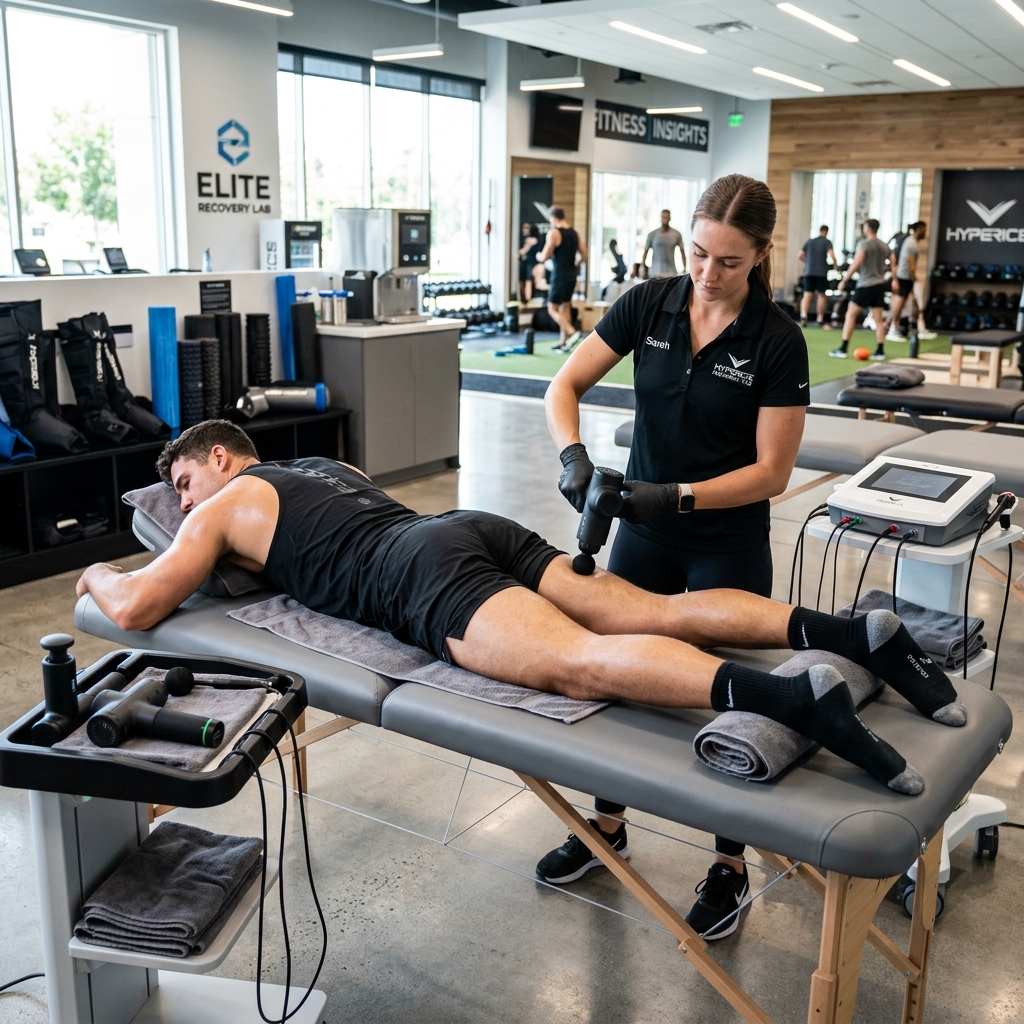
Massage, foam rolling, and manual therapy work best as ongoing maintenance, not as emergency responses. If you are only getting soft tissue work when something is already painful, you are using it as a repair tool rather than a prevention tool.
Regular sessions — even once a month — can catch accumulating tightness and restriction before it affects movement quality. This is part of why our Sports Recovery Visit is designed for active patients who want to use chiropractic care proactively, not just when something goes wrong.
Eat and hydrate to support recovery, not just performance
Fueling for performance is well understood by most active adults. Fueling for recovery is less consistently practiced. Post-session nutrition — protein and carbohydrates within a couple of hours of a hard effort — is one of the most evidence-supported recovery interventions available, and it is free.
Hydration is similarly foundational. Even mild dehydration impairs tissue recovery and can contribute to the kind of low-grade stiffness and fatigue that accumulates over weeks of training. A simple benchmark: your urine should be pale yellow most of the time.
When to bring in professional support
If something is not resolving with rest and these habits, or if you are noticing the same issues returning every training season, that pattern is worth evaluating. A Sports Recovery Visit is built for exactly this — understanding the movement restrictions and structural patterns that are affecting your performance or causing recurring issues, and addressing them before they become significant.